Custom Step and Repeat Backdrops: A Buyer’s Guide for Event Teams
Custom step and repeat backdrops are the highest-leverage branding at any event, because they do their work after the event is over: every photo taken in front of one carries your logos into feeds, press coverage, and recap decks for years. For event planners, PR agencies, nonprofits running galas, and corporate marketing teams, the backdrop is the difference between photos of people and photos of people with your brand. Yet the decisions behind a good one, material, logo spacing, size, and lighting behavior, are invisible until the photos come back wrong. This guide covers how to buy custom step and repeat backdrops that photograph cleanly every time.
Material: Vinyl, Fabric, or Mesh
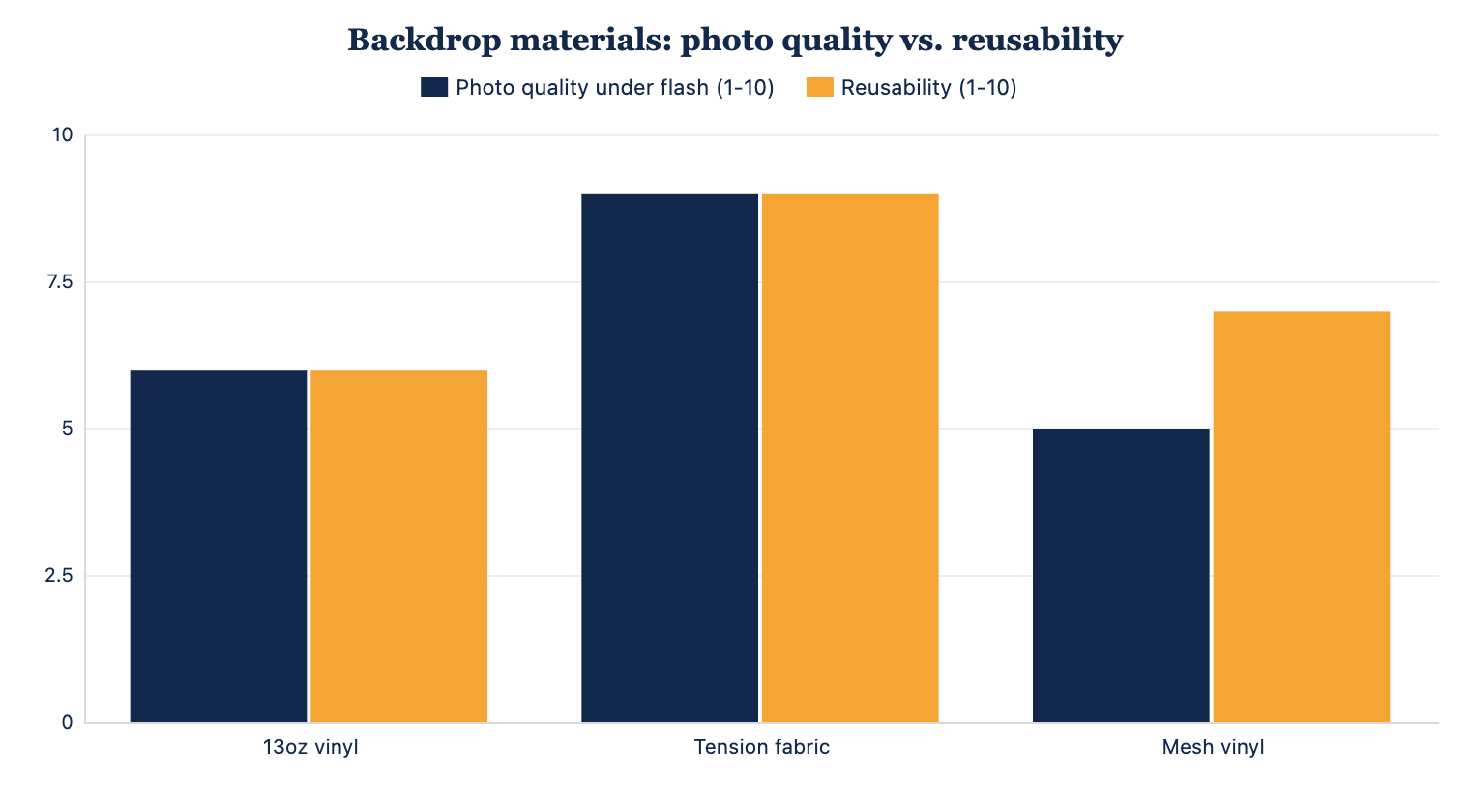
Matte 13oz vinyl is the traditional workhorse: affordable, printable edge to edge, and durable for repeated setups, but even matte vinyl can throw glare under direct flash, and it creases if folded rather than rolled. Tension fabric has become the photographer’s favorite, because the polyester surface diffuses light with almost no glare, seams disappear, and wrinkles pull out when the fabric stretches over its frame; it also machine-washes, which matters for a backdrop that tours. Mesh vinyl suits outdoor settings where wind load is a factor, accepting some visual texture in exchange for stability.
If your backdrop will be photographed with professional lighting, fabric earns its premium immediately. If it lives at a registration table under ambient light, vinyl does the job for less.
The Logo Grid: Spacing Is the Whole Game
The step and repeat pattern exists so that at least one clean, uncropped logo appears near every subject’s head and shoulders in every framing. The standard diagonal grid alternates logos at roughly 8 to 12 inches wide with generous white space; cram them tighter and photos read as noise, space them wider and half your shots contain no complete logo. For two-brand events, alternate the marks evenly; beyond three logos, hierarchy collapses and everyone loses, so negotiate top billing early.
Keep a 12-inch margin of pattern beyond the expected crop, since real photographers frame wider than you think, and never place logos where they will sit directly behind faces, which means avoiding a dense band at five to six feet high in favor of an even all-over grid.
Size & Placement Logic
Eight feet tall is the practical minimum so the pattern extends above heads in standing shots. Width follows the use: 8×8 suits single-subject press hits, 8×10 to 8×12 handles small groups comfortably, and 8×16 to 8×20 serves red-carpet lines where multiple groups shoot simultaneously. Leave three to four feet between backdrop and subjects to soften shadows, and plan the photo area’s floor and lighting as part of the purchase, not an afterthought.
Stands and rigging
Adjustable telescoping stands cover most hotel-ballroom uses; frequent-touring backdrops justify rigid SEG frames that assemble in minutes and hold fabric drum-tight.
| Size | Fits | Typical use |
|---|---|---|
| 8×8 ft | 1-2 people | Press interviews, headshot walls |
| 8×10-8×12 ft | 3-5 people | Galas, sponsor walls, award nights |
| 8×16-8×20 ft | 6+ people | Red carpets, premieres, large galas |
Pricing, Packages & Turnaround
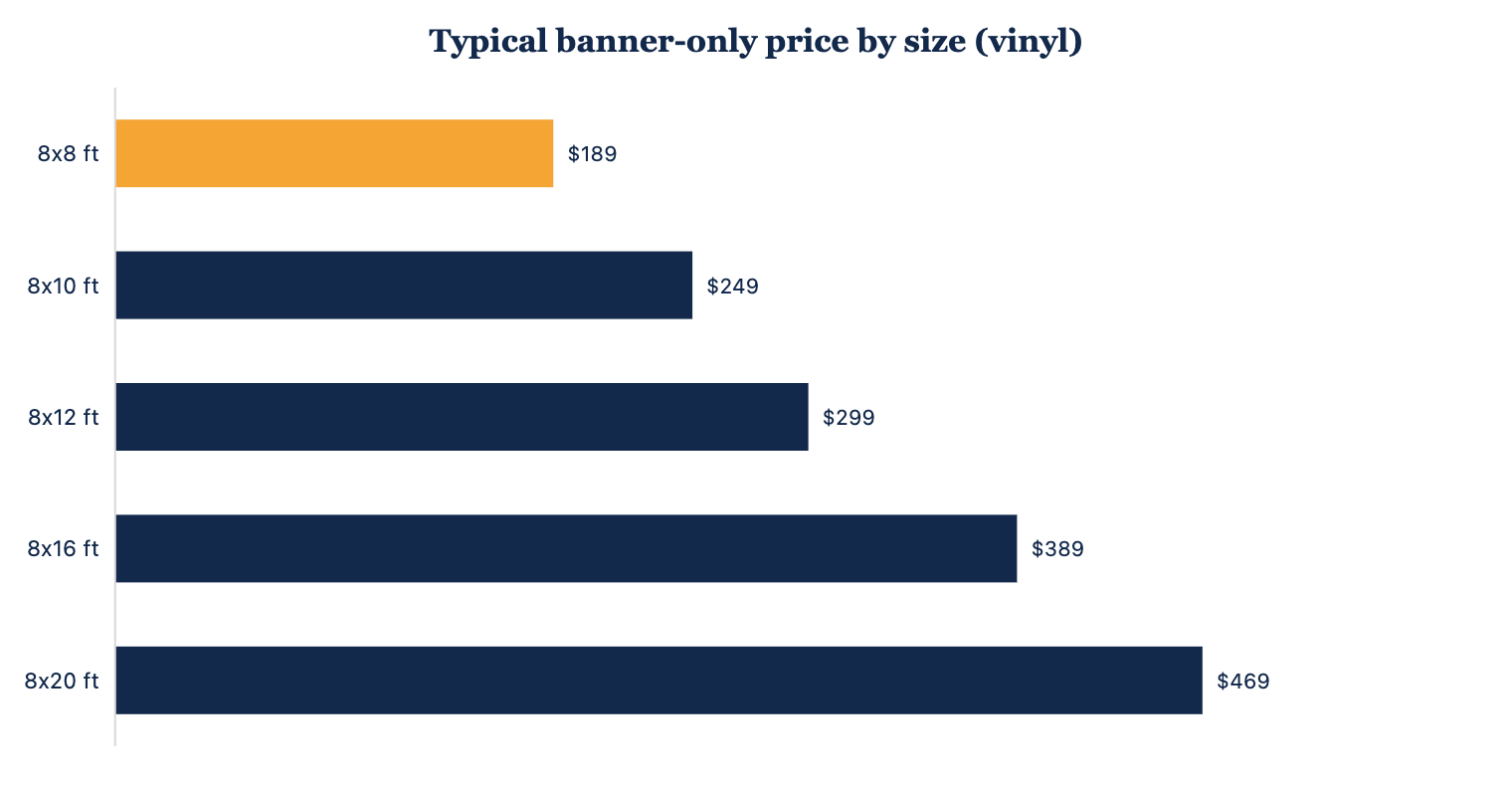
Banner-only pricing scales with square footage, from under two hundred dollars for an 8×8 vinyl to around five hundred for an 8×20, with tension fabric roughly thirty to fifty percent above vinyl at each size. Stands add one to two hundred dollars, and complete kits with carry bags are usually the better buy for teams that will reuse the system across events. Reusability changes the math entirely: a fabric backdrop with a generic brand grid, no dates or event names, amortizes across every event on the calendar.
Standard production runs three to five business days plus shipping, with rush options compressing to forty-eight hours at a premium. Proof carefully: logo grids multiply any error dozens of times across the banner.
Logistics on Event Day
Assign the backdrop a fifteen-minute setup slot and a straightening check before doors, keep a steamer nearby for fabric, and brief the photographer on where the clean logo zones sit so framing cooperates with the grid. Roll vinyl, never fold it, and bag fabric dry.
Common Buying Mistakes to Avoid
The mistake that ruins the most backdrops is low-contrast logos. A white logo on a light ground, or a thin-line mark in a pale brand color, simply vanishes under flash, and nobody discovers it until the first press photos come back. Test every logo at fifty percent scale in grayscale; if it survives that, it will survive a camera. The second mistake is printing event dates and hashtags across the grid, which turns a reusable asset into single-use signage; put dated elements on a separate small sign beside the backdrop and keep the wall itself evergreen.
Third, teams buy the banner and improvise everything else. A backdrop without sandbags wobbles on camera, without lighting it hosts shadowed faces, and without a floor plan it ends up beside a fire exit sign that appears in every photo. Budget the full photo moment, backdrop, stand, weights, two lights, and three clear feet of standing room, as one purchase. Finally, order earlier than the rush window even when rush is available: a reprint after a proofing miss needs somewhere to land, and a backdrop arriving the morning of the gala leaves no room for the error everyone hopes not to make.
Choosing by Buyer Type
An event planner serving many clients should own the frame system and order client-branded fabric graphics per event, reusing hardware. A PR agency staging press moments should insist on tension fabric and an even grid sized 8×10 or larger for group flexibility. A nonprofit gala team gets the best value from a dateless sponsor wall design reused across the season, with sponsor tiers reflected in logo size rather than placement chaos. Compare materials, sizes, and kit pricing here or read about our proofing and production process before your next event.
The bottom line: fabric for flash, an even grid with room to breathe, a size matched to your shot list, and no dates on anything you want to reuse. Get those right and every photo works for you.
Backdrop for your next event?
Tell us your event date, photo plans, and logos and we will recommend a material, size, and grid layout with a proof and delivery schedule.
Get a QuoteHome · About · Get a Quote
Win Free Stuff
Enter below for a chance to win plus receive 10% off your first order.
🎉 You are in!
Check your email for your 10% off code. Good luck!
Leave a Reply