To keep a step and repeat looking sharp, spot clean it gently, let it dry fully, then fold or roll it by material and store it indoors in its own case. Custom Step & Repeats prints step repeats in tension fabric, vinyl and retractable formats, and each one needs a slightly different cleaning and storage routine to survive many events.
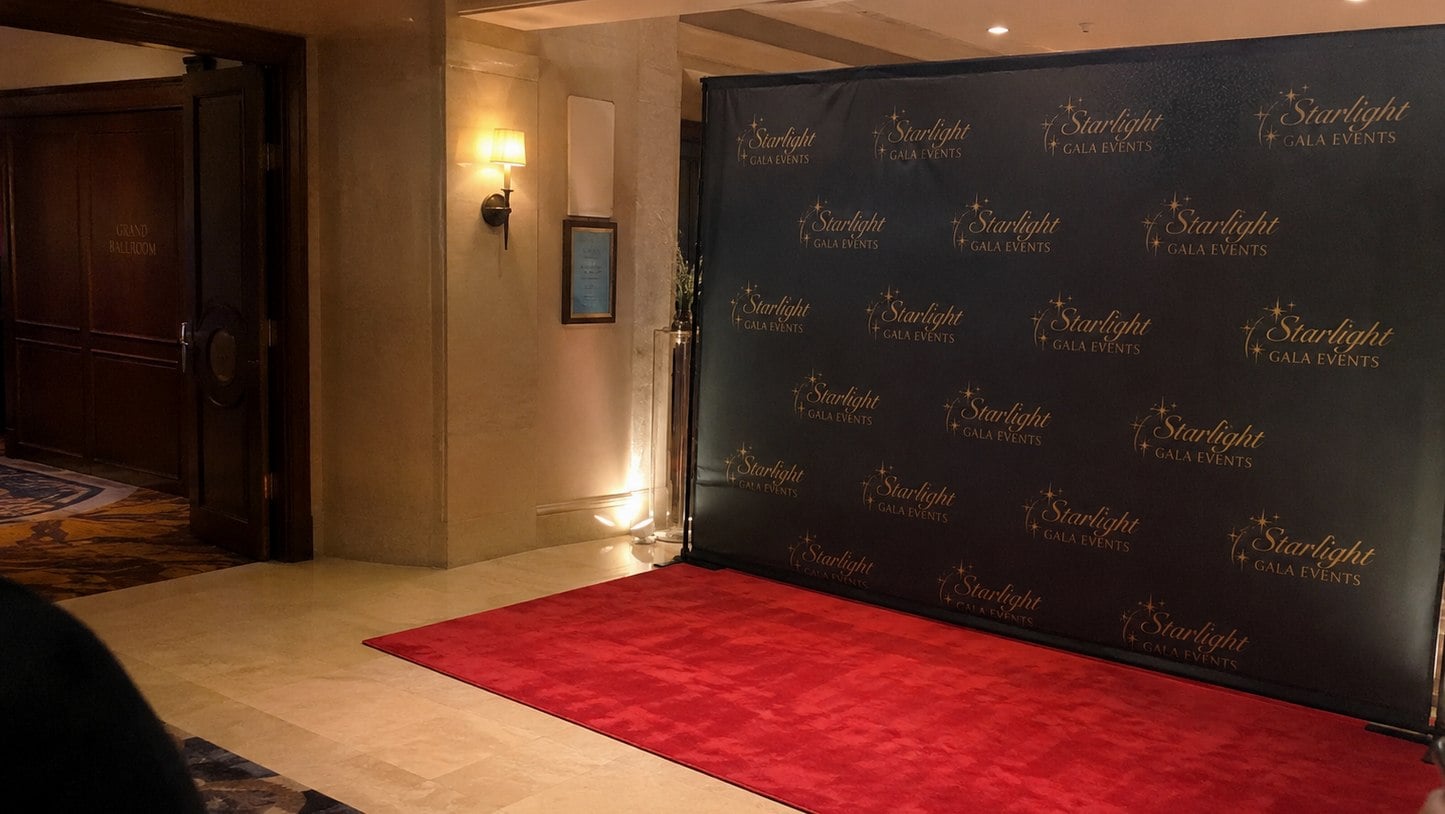
- Tension fabric step repeats can be spot cleaned and steamed smooth.
- Vinyl step repeats should be rolled print side out, never folded.
- Always dry a backdrop fully before packing it.
- Store step repeats indoors, away from heat and damp.
- Free mockup within 24 hours when you order a replacement graphic.
How do you make a step and repeat last for many events?
A step and repeat lasts for many events when you treat the graphic and the hardware as two separate things to protect: keep the printed face clean and crease-free, and keep the frame or stand complete and undamaged. Most backdrops that wear out early were packed wet, folded the wrong way or stored with a missing part that someone improvised around at the next event.
The material you chose sets the care routine. Tension fabric step repeats are dye-sublimated, so the ink sits inside the fibers rather than on top, and the fabric can be folded, packed in a bag and steamed or stretched smooth again. Vinyl step repeats carry ink on a coated surface and prefer to be rolled, never folded hard. Retractable step repeats store the graphic inside the base, so the job is mostly about keeping the cassette clean and the pole sections together.
Build three habits into your event routine and the same backdrop will keep photographing well:
- Inspect at teardown. Look for marks, scuffs and loose hardware while you still remember what happened at the event.
- Dry before packing. Never bag a backdrop that is damp from an outdoor event or a spilled drink.
- Pack the same way every time. Use the original bag or case and keep a simple parts list inside it.
How do you clean a tension fabric step and repeat?
A tension fabric step and repeat can usually be spot cleaned with cool water and a mild soap, and many polyester backdrop fabrics tolerate a gentle cold machine wash on their own. Because the logos are dye-sublimated into the polyester, light cleaning does not scrape the print away the way it can on a surface-printed banner. Always test any cleaner on a hem or back corner first.
Work from the outside of a stain inward so you do not spread it, and blot rather than scrub. Rinse the area with plain water so no soap residue dries into a shiny patch that catches the camera flash. Let the fabric dry flat or hung on its frame, away from direct heat.
- Remove the fabric from the frame and shake off dust and confetti.
- Spot treat marks with cool water and a drop of mild detergent.
- Blot, rinse with clean water and blot again.
- Dry flat or stretched on the frame, out of direct sun.
- Steam or stretch out wrinkles once fully dry.
Skip bleach, solvent cleaners and hot dryers. Heat can soften the zipper edge or silicone strip that holds a tension fabric graphic on the frame, and a warped edge is harder to pull tight than any wrinkle.

How do you clean a vinyl step and repeat banner?
A vinyl step and repeat banner cleans best with a soft cloth, lukewarm water and a mild soap, wiped gently in one direction and dried with a second clean cloth. Vinyl is the easier material to wipe down after an outdoor event because water and mud sit on the surface, but the ink also sits on the surface, so harsh cleaners or abrasive pads can dull it.
Lay the vinyl banner flat on a clean floor or table, printed side up, and work in sections. Avoid rubbing over the same logo repeatedly, and never use alcohol, acetone or glass cleaners on the printed face. Check the grommets or pole pockets while the banner is flat, since a torn grommet is the most common reason a vinyl backdrop stops hanging straight.
Let the vinyl banner air dry completely before you roll it. Rolling a damp vinyl step and repeat can leave water marks or a musty smell that shows up the next time you unpack it in a warm venue.
What is the best way to store a step and repeat between events?
The best way to store a step and repeat is clean, dry, indoors and in its own bag or case, with fabric folded loosely or rolled and vinyl always rolled printed side out around a tube. Store the backdrop flat or upright in a climate-controlled room rather than a hot vehicle, an attic or a damp basement, where heat and moisture do the most damage.
| Format | How to pack it | What to avoid |
|---|---|---|
| Tension fabric step and repeat | Fold loosely or roll, then pack in the carry bag with the frame | Packing damp, sharp creases pressed under heavy boxes |
| Vinyl step and repeat | Roll printed side out around a tube, then bag or case it | Hard folds, rolling while wet, storing in a hot trunk |
| Retractable step and repeat | Retract fully, lock the base, keep poles and bag together | Letting the graphic snap back, losing pole sections |
| Telescopic backdrop kit | Collapse poles, bag the banner separately from the hardware | Metal parts rubbing against the printed face |
Label each case on the outside with the event name or brand, the format and the date it was last used. When your team owns several step repeats, a clear label stops someone from shipping last season’s sponsor wall to this season’s gala.
How do you get wrinkles out of a step and repeat before photos?
Wrinkles come out of a tension fabric step and repeat by stretching it fully onto the frame and, for stubborn creases, using a handheld garment steamer from behind the fabric. Tension fabric is built to pull tight, so most fold lines fade once the graphic is zipped or pressed into the frame and given some time to relax in the room.
Steam from the back side, keep the steamer moving and hold it a short distance from the fabric so you never press a hot plate against the print. Set up the backdrop early on event day so any remaining creases have time to settle before guests arrive.
Vinyl step repeats do not steam well. The fix for vinyl is prevention: roll instead of fold, and unroll the banner the night before so it can relax flat. If a vinyl backdrop has a hard crease, hanging it with even tension on a stand often pulls most of the line out. The setup guide on stands covers tensioning in more detail, so this piece focuses on what happens before and after the event.
When should you replace a step and repeat instead of reusing it?
Replace a step and repeat when the logos on it are out of date, when the printed face has stains or fading that show in photos, or when the hardware no longer holds the graphic tight. A backdrop that looks fine to the eye can still look tired on camera, because flash and phone sensors exaggerate marks, creases and color shifts.
Take a few test photos in front of the backdrop at every setup, using a phone flash. If marks show up in those photos, guests will see them in their posts too. Common signs that a step and repeat has reached the end of its run include:
- A rebrand, a new event name or a sponsor lineup that has changed.
- Stains that survived spot cleaning or shiny patches from old cleaners.
- A stretched, torn or warped edge on a tension fabric graphic.
- Cracked ink or torn grommets on a vinyl banner.
- A retractable stand that no longer locks or rolls back evenly.
Replacing the graphic does not always mean replacing the hardware. A sound telescopic frame or tension fabric frame can take a newly printed graphic, which is often the simplest way to refresh a sponsor wall for a new season.
Which step and repeat format is easiest to care for?
A retractable step and repeat is the easiest format to care for day to day, because the graphic rolls into its own base and is protected between uses. A tension fabric step and repeat is the most forgiving over the long run, since it can be cleaned and stretched smooth again. A vinyl step and repeat is the most water resistant, which suits outdoor events, but needs the most careful rolling.
If your team runs frequent events with volunteers doing setup, ease of storage usually matters most. If your backdrop travels a lot by checked bag or freight, a fabric graphic that packs small and recovers from folding is usually the safer pick. If you host outdoor events in changing weather, vinyl or a fabric rated for outdoor use is worth discussing with the quote team.
The materials comparison already on this blog explains how tension fabric and vinyl differ in look and price drivers. For care decisions, ask one question: who will pack the backdrop at the end of the night, and how much time will they have? Pick the format that holds up to the way your team actually tears down.
How should you order a step and repeat that you plan to reuse?
Order a reusable step and repeat by keeping time-sensitive details off the main graphic and telling the quote team that the backdrop will travel and be stored between events. Event years, one-off sponsors and dated hashtags shorten the life of a backdrop more than wear does, so a clean logo pattern usually earns the most uses.
When you request a quote from Custom Step & Repeats, mention how often the step and repeat will be set up, whether it will be used outdoors and who will handle it. That context helps the team suggest a format and hardware combination that suits the care routine you can realistically follow.
- Use evergreen artwork for the main backdrop and add event-specific signage separately.
- Ask for a carry bag or case that fits the hardware and the graphic together.
- Keep your approved artwork file so a replacement graphic can be printed to match later.
Custom Step & Repeats sends a free mockup within 24 hours, offers unlimited free revisions, and you pay nothing until you approve the design. Standard turnaround is about 2 weeks after approval, with faster turnaround available through express shipping, and the minimum order is 12 when you are outfitting several locations with matching backdrops.
Frequently asked questions
Can a tension fabric step and repeat go in a washing machine?
A tension fabric step and repeat made from polyester can often handle a gentle cold wash on its own, but always check the care guidance supplied with your order first. Remove the graphic from the frame, wash without other items, skip bleach and fabric softener, and air dry it flat or stretched. Custom Step & Repeats recommends spot cleaning first, since many marks lift without a full wash.
What cleaners should never touch a vinyl step and repeat?
A vinyl step and repeat should never be cleaned with alcohol, acetone, ammonia glass cleaners, bleach or abrasive scrub pads. The ink on vinyl sits on the coated surface, so strong chemicals and rough pads can dull or lift the logos. Mild soap, lukewarm water and a soft cloth handle almost every mark, followed by a dry cloth and full air drying before rolling.
Should a vinyl step and repeat be rolled with the print facing in or out?
A vinyl step and repeat is best rolled with the printed side facing out around a sturdy tube. Rolling print side out keeps the ink from compressing into tight curls and makes the banner relax flatter when it is unrolled on event day. Avoid folding vinyl at all, because hard folds can crack the ink and leave lines that show clearly in photos.
How do you remove makeup or lipstick marks from a backdrop?
Makeup on a tension fabric step and repeat usually lifts with a cloth dampened in cool water and a drop of mild dish soap, blotted gently from the edge inward. Rinse with plain water so no residue dries shiny. On vinyl, wipe softly with the same mix. Test on a back corner first, and treat the mark soon after the event rather than weeks later.
Can a step and repeat be stored in a car or garage between events?
A step and repeat should not live in a car trunk or an unheated garage between events. Heat can soften vinyl and warp the edge strip on a tension fabric graphic, while damp air invites mildew and musty smells. Store the backdrop indoors in its bag or case, in a dry room, and only load it into a vehicle on the day of travel.
What should go inside a step and repeat storage case?
A step and repeat storage case should hold the graphic, every pole or frame section, the base or feet, any clips or connectors and a short printed parts list. Add a spare cloth for quick wipe downs and a note of the last event it was used for. Custom Step & Repeats suggests checking the parts list at every teardown so nothing goes missing between shows.
How can volunteers pack a step and repeat without damaging it?
Volunteers pack a step and repeat safely when the steps are written down and taped inside the case. Ask them to remove the graphic before collapsing the frame, keep the printed face away from metal parts and confirm the backdrop is dry. Assign one person to check the parts list at the end of the night so a rushed teardown does not lose a pole or clip.
Does sunlight fade a step and repeat over time?
A step and repeat can fade with long exposure to strong direct sunlight, especially when it is left up outdoors for days at a time. Occasional outdoor events are usually fine, but avoid leaving the backdrop in a sunny window or open-air area between uses. Custom Step & Repeats can talk through outdoor needs during the quote so the format suits how and where you will use it.
Can a damaged retractable step and repeat graphic be replaced in the same stand?
A retractable step and repeat stand can sometimes accept a replacement graphic, depending on the stand and whether the mechanism still works smoothly. Share photos and details of your current stand when you request a quote from Custom Step & Repeats, and the team will advise whether a new printed graphic or a complete new unit makes more sense for your next event.
How do you get a musty smell out of a stored backdrop?
A musty step and repeat usually needs airing out in a dry, ventilated room for a day before anything else. If the smell stays, spot clean a tension fabric graphic with mild soap and water and let it dry fully, or wipe a vinyl banner with a damp cloth. A lingering smell or visible mildew spots often means the backdrop was packed damp and may be due for replacement.
How often should a step and repeat be inspected?
A step and repeat should be inspected at every teardown and again before it ships to the next event. Look at the printed face under bright light, check the edges, grommets and zippers, and count the hardware against the parts list. Custom Step & Repeats finds that a quick check at both points catches most problems while there is still time to clean or replace parts.
Can old step repeats be recycled or repurposed?
Retired step repeats can often be repurposed rather than thrown away. Tension fabric graphics can become table covers, photo props or tote material, and vinyl banners can protect floors during setup or cover gear in storage. Recycling options for printed polyester and vinyl vary by area, so check with local recycling services before dropping off a backdrop that has reached the end of its run.
Get a free mockup for your step repeats
Send your logo or idea and the quantity you have in mind. Custom Step & Repeats returns a free mockup within 24 hours, you approve the design before anything is produced, and standard turnaround is about two weeks with faster options available. Get a custom quote.