If you’ve never ordered one before, custom step and repeats can feel like a category with no fixed rules — every printer lists a different size, a different material, and a price that swings from under $100 to over $200 for what looks like the same 8×8 backdrop. That range isn’t random. It comes down to three things: the size you pick, whether you print on vinyl or fabric, and how fast you need it in hand.
This guide breaks down what a step and repeat actually costs at each size, what separates the cheap listings from the ones that hold up under camera flash, and what to budget for the stand that holds the whole thing up. The goal is to get you to checkout knowing exactly what you’re paying for, instead of guessing between three browser tabs.
Source: AZ Banners and 4over4.com material specifications; Trade Show House and Instant Promotion stand listings, accessed August 2026
What a step and repeat actually is (and why sizing matters first)
A step and repeat is a printed backdrop with a logo or pattern tiled across it in a repeating grid — the format built for red-carpet photo lines, where a subject “steps” in front and the sponsor logos “repeat” behind them in every shot. It’s a single printed panel, not a full room wrap, which is why sizing it correctly matters more than people expect.
Most first-time buyers default to 8’x8′ because it’s the size they’ve seen at award shows. That works fine for one or two people posing straight-on. If you’re photographing groups, or if your step-and-repeat stand has a wider footprint, size up to 8’x10′ or order a custom width — most printers will produce anything up to roughly 96″ x 120″ without an upcharge for going off the standard grid.
How much do custom step and repeats cost?
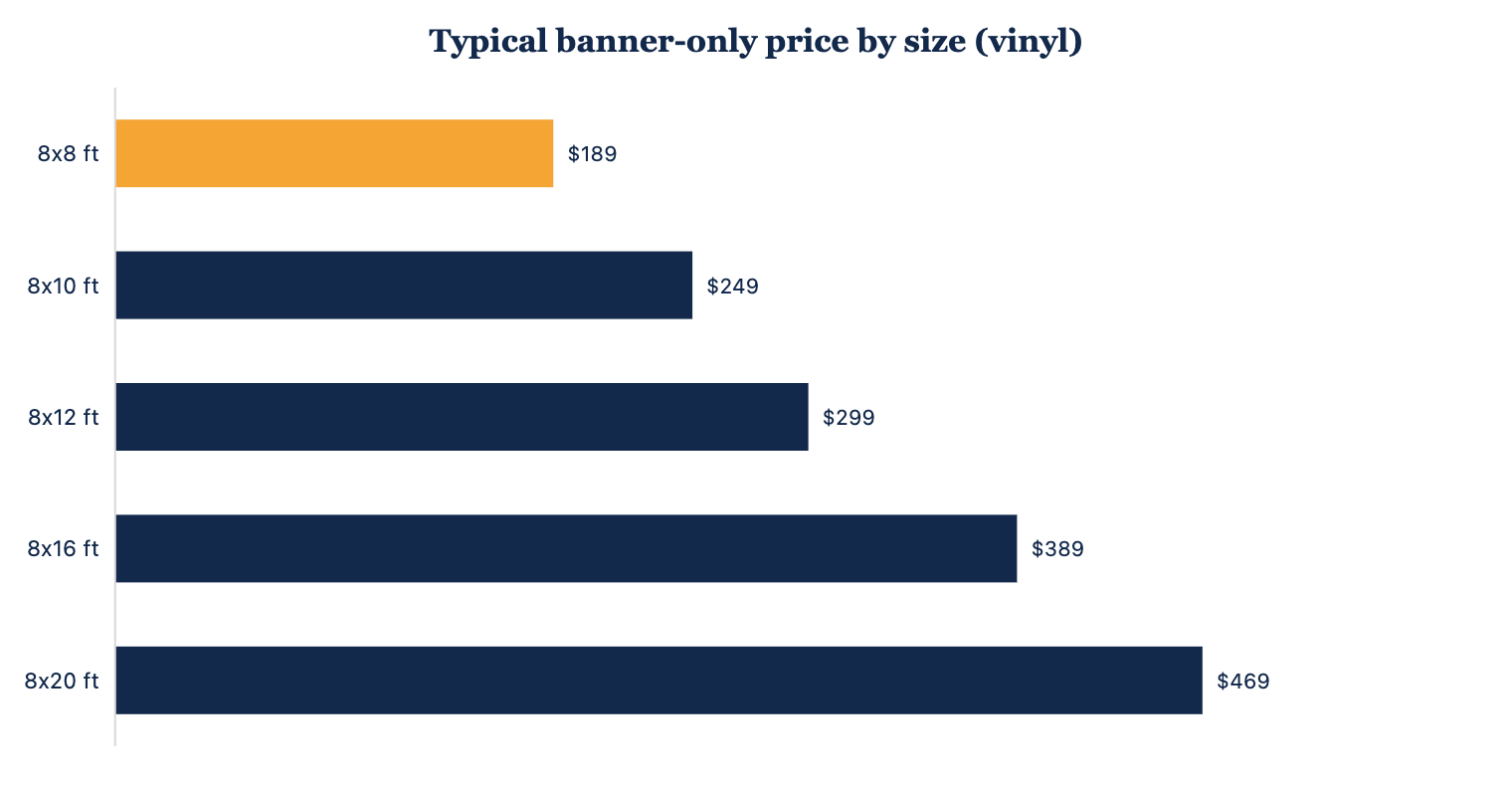
Pricing splits into two tiers. Budget printers sell a basic 8’x8′ vinyl or fabric banner for under $100, with an 8’x10′ running slightly more. Full-service printers charge more for the same footprint because the base price includes a heavier material grade, finished pole pockets, and faster proofing.
The table below shows two real data points from current listings so you can see where your project likely falls. Treat the lower number as a floor for a basic single-use banner, and the higher number as what you’ll pay for a heavier, reusable print meant to survive more than one event.
| Vendor | Size | Material | Starting Price |
|---|---|---|---|
| BingBanners | 8′ x 8′ | Vinyl/fabric banner | $98 |
| BingBanners | 8′ x 10′ | Vinyl/fabric banner | $118 |
| 4over4 | 8′ x 8′ | 13 oz vinyl or 9 oz fabric, free pole pockets | $217.50 |
Vinyl vs. fabric: which material to order
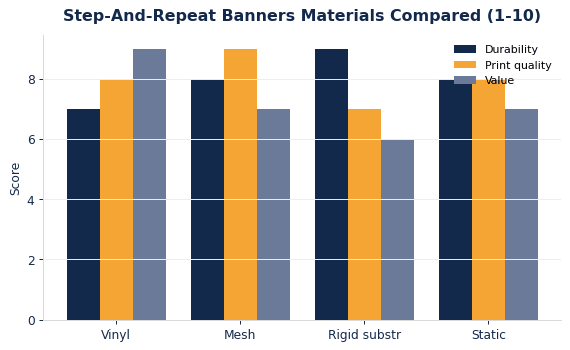
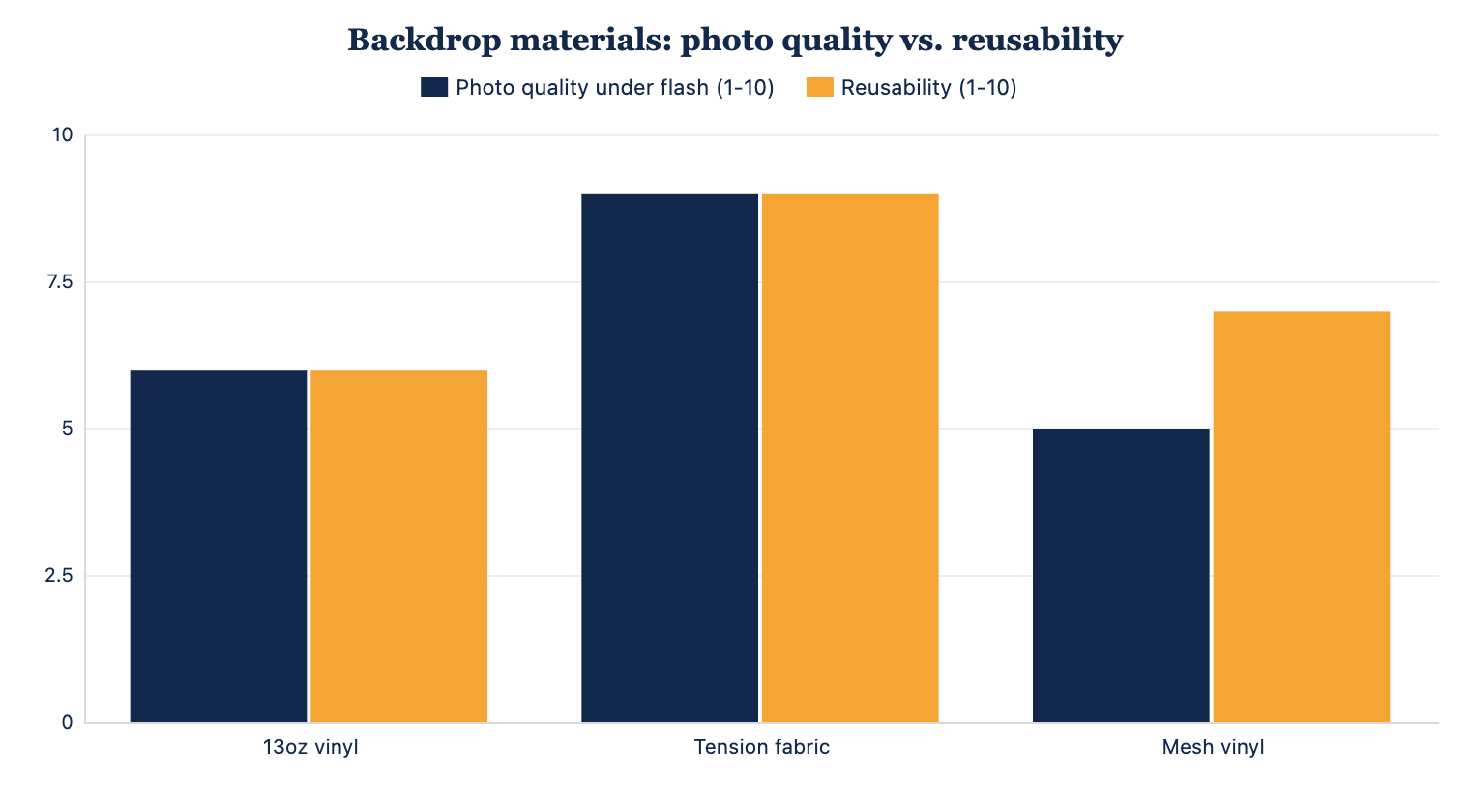
This is the decision that actually changes how your photos look, not just how much you pay. Standard event vinyl runs 13 oz, with 16-18 oz heavy-duty vinyl available for outdoor or high-wind setups. It’s stiff, opaque, and resists sagging — but a glossy or semi-gloss vinyl finish can bounce camera flash straight back at the lens, which is the washed-out glare you sometimes see in step-and-repeat photos from budget events.
Polyester fabric, typically 6.8 oz to 9 oz depending on the wrinkle-resistant grade, solves that problem. The weave absorbs light instead of reflecting it, so flash photography reads clean. Fabric also folds flat into a bag instead of rolling into a tube, which matters if you’re checking it as luggage or storing it between events. The tradeoff is that fabric moves more in a draft, so it’s a better fit for indoor step-and-repeat stands than an outdoor step-and-repeat wall.
If you only do one event a year and it’s indoors, fabric is worth the small premium. If the backdrop travels to outdoor markets, sponsor tents, or anywhere with airflow, stick with vinyl.
Stands and hardware: the cost people forget to budget
The printed banner is only half the purchase. Unless you’re taping a backdrop to an existing wall, you need a stand, and that’s a separate line item most people don’t research until the banner has already shipped.
A telescopic, adjustable step-and-repeat stand for an 8’x8′ footprint runs roughly $53 to $90 depending on frame weight and whether a carry bag is included. Heavier-duty 10’x10′ kits push closer to $83-plus. These frames adjust in both directions, so the same stand can usually be resized down for an 8’x8′ fabric print or up for a wider vinyl banner — which is worth knowing if you expect to reuse the hardware across different backdrop sizes.
Match the stand to the material you ordered: pole-pocket banners need a frame with top and bottom bars, while some fabric displays use a pop-up frame with a Velcro-attached graphic instead. Confirm which hardware your banner’s finish is built for before you order the stand separately.
Turnaround time: standard vs. rush
Standard production on a step and repeat commonly runs 3 business days before it ships, though some printers hold that to 2. If your event is closer than that, rush service is widely available — many shops offer 1-2 business day production for an added fee, and a handful advertise next-day or same-day printing if you get the order in before their morning cutoff.
None of those windows include shipping or holidays and weekends, so a “3 business day” turnaround for an event on Friday means your order needs to go in by the start of the week, with overnight shipping layered on top if you’re cutting it close. If your event date is firm, it’s worth calling the printer directly to confirm they can hit it rather than trusting the checkout page’s estimate alone.
Getting your artwork ready
Step-and-repeat art is a repeating logo grid, which means small mistakes get multiplied across the whole panel. Send your logo as vector art (AI, EPS, or a high-resolution PDF) rather than a screenshot or a small PNG pulled off a website — at 8 feet wide, low-resolution files pixelate fast. Most printers ask for artwork sized to the actual banner dimensions at 100-150 DPI, with logos spaced so the repeat pattern doesn’t awkwardly crop a logo in half at eye level, which is where most photos get taken.
If you’re ordering for a recurring event, save the print-ready file exactly as approved. Reordering the same custom step and repeats next year with a small date change is far cheaper than rebuilding the layout from scratch, and it guarantees your logo spacing matches what worked the first time.
Frequently asked questions
What size step and repeat should I order for a photo backdrop?
8’x8′ is the standard for one or two people posing straight-on and is the most commonly ordered size. If you’re photographing groups or want more margin around the subject, go with 8’x10′ or a custom width — most printers will produce up to roughly 96″ x 120″ without treating it as a special order.
Is vinyl or fabric better for a step and repeat banner?
Vinyl (13 oz standard, up to 16-18 oz heavy-duty) is stiffer and better outdoors or anywhere there’s wind. Fabric (6.8-9 oz polyester) is lighter, folds flat for travel, and doesn’t produce the flash glare that glossy vinyl sometimes does in photos, making it the better pick for indoor press events.
How much does a custom step and repeat cost?
Based on current listings, a basic 8’x8′ banner starts around $98-$118 depending on size at budget printers, while a heavier blockout vinyl or wrinkle-free fabric print with finished pole pockets from a full-service printer starts closer to $217.50. A separate adjustable stand adds roughly $53-$90.
How long does it take to get a step and repeat printed?
Standard production is commonly 3 business days before shipping, though some printers hold to 2. Rush options of 1-2 business days are widely available for an added fee, and a few printers offer next-day or same-day service if the order is placed before their morning cutoff. Shipping time and weekends/holidays are separate from the printed turnaround.
Do I need to buy a stand separately from the banner?
Yes, in most cases the printed banner and the stand are sold separately. A telescopic, adjustable frame for an 8’x8′ footprint runs roughly $53-$90; heavier 10’x10′ kits run higher. Match the stand type to your banner’s finish (pole pockets vs. a pop-up Velcro frame) before ordering.
What file format do printers need for step and repeat artwork?
Vector formats (AI, EPS, or a high-resolution PDF) are strongly preferred over raster images, since the logo repeats across an 8-foot-or-wider panel and low-resolution files pixelate noticeably at that scale. Printers typically request the file sized to actual banner dimensions at 100-150 DPI.
The bottom line
The price spread on custom step and repeats comes down to a short list of decisions: the size you need, vinyl versus fabric, and how fast you need it printed. Once you’ve picked those three, comparing quotes is straightforward — you’re no longer comparing apples to oranges across five open tabs, you’re comparing the same spec at different prices.
Start with the size your stand actually supports, pick fabric if the event is indoors and vinyl if it isn’t, and build in a day or two of buffer past the printer’s stated turnaround before you commit to a ship date.